Report by L. Reagan Florence
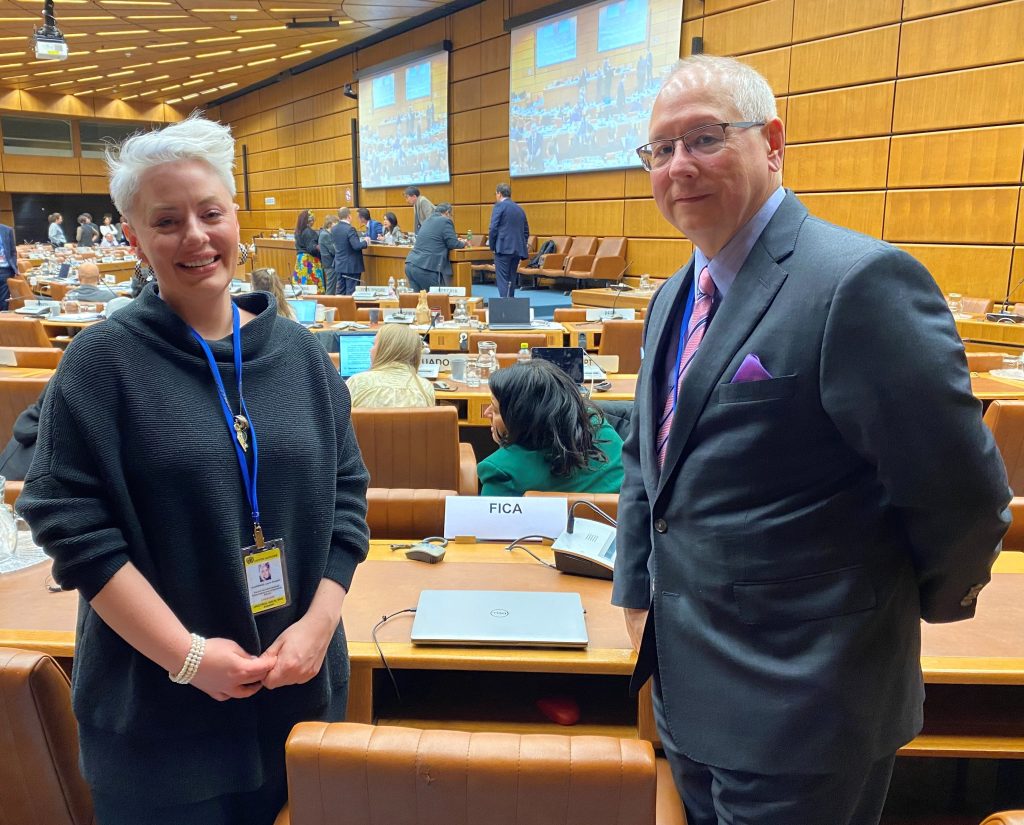
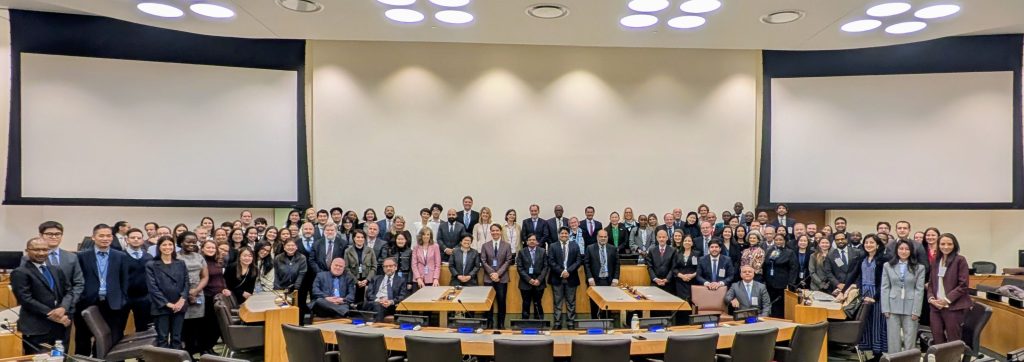
FICA Secretary and Fellow Dr. Alan M. Anderson and FICA Member L. Reagan Florence attended the 54th session of UNCITRAL Working Group III. Working Group III continued its discussions relating to Investor-State Dispute Settlement Reform the week of 23-27 March 2026, in Vienna, Austria, at the United Nations International Centre. Below is a general summary of the meetings:
Scope and Jurisdiction of the Permanent Tribunal:
Working Group III continued its previous discussions relating to the reform of investor-state dispute settlement (“ISDS”), focusing on the logistics and structure of a proposed standing mechanisms, including a Permanent Tribunal and Appellate Tribunal. Deliberations varied regarding scope, jurisdiction, consent, financing, institutional governance, and procedural logistics and design of the Permanent Tribunal and Appellate Tribunal.
One major issue discussed was the scope of disputes falling within the Permanent Tribunal’s jurisdiction. Delegates considered whether jurisdiction should extend beyond investor–state disputes to include state-to-state disputes, especially where treaties provide substantive protections but lack a specific dispute settlement mechanism. The participants were divided, with some advocating for narrow treaty-based approaches, and others arguing for a broader scope to preserve party autonomy. The delegates generally agreed that jurisdiction should be consent-based, and that any drafting options should reflect a variety of different approaches.
Scope and Jurisdiction of the Appellate Tribunal:
The Appellate Tribunal was widely seen as a tool to enhance consistency in investment treaty interpretation. However, views diverged on its scope. Some favored limiting appellate jurisdiction to treaty-based disputes, while others supported a broader application including disputes arising from contracts and domestic state legislation. Concerns were raised about whether the Appellate Tribunal should review decisions based primarily in domestic law, although others noted that mixed legal bases are common in arbitration.
Further discussions centered around consent, noting any consent to appeal should ideally be secured before a dispute arises by the parties. However, post-award consent was also discussed and considered in limited context. Many voices emphasized the need for clear mechanisms to express consent in treaties and contracts.
A general consensus appeared to exist that any appellate jurisdiction should cover decisions of the Permanent Tribunal, International Centre for Settlement of Investment Disputes (“ICSID”) arbitral awards, and non-ICSID arbitral awards. However, the relationship between the Permanent Tribunal and Appellate Tribunal, including their jurisdictional scopes, remains an issue for further development and consideration. Further, broader institutional considerations such as financial sustainability, caseload management, and the qualifications of judges for the Appellate Tribunal were also discussed. The delegations recognized that further development on these topics is necessary by Working Group III.
Exclusive Jurisdiction, Consent, and Enforcement of the Permanent Tribunal:
Delegates discussed whether the Permanent Tribunal should operate with default exclusive jurisdiction or as an additional dispute resolution option. Arguments against exclusivity looked at the importance of preserving party autonomy and maintaining access to alternative dispute resolution mechanisms. Other voices pointed out that exclusivity is essential to the standing mechanism.
The Working Group addressed scenarios where consent is not aligned between treaty parties or contracting parties as “imperfect matches.” It was generally agreed that jurisdiction should not arise without express consent from all treaty parties, especially in treaty-based disputes. A potential hybrid form of default exclusive jurisdiction coupled with an opt-out mechanism was discussed as a possibility. The Secretariat was requested to draft provisions requiring explicit waivers when appeals are pursued, similar to those in existing frameworks like the New York Convention.
Working Group III further discussed enforcement and recognition and that the Permanent Tribunal will operate in a self-regulating enforcement system, that will be limited to monetary obligations. Discussions continued over the role of the New York Convention in enforcement measures, with some supporting aligning the system with arbitration to facilitate enforcement, while others cautioned against extending obligations to non-contracting parties. The Working Group agreed to revisions reflecting consent-based enforcement, rather than imposing obligations on non-contracting parties.
Financing the Permanent Tribunal:
Working Group III discussed at length the logistics and financing of the proposed Permanent Tribunal, recognizing that any long-term viability of the institution requires a sustainable and balanced funding model. The Working Group considered a potential hybrid financing model based on user-fees as the primary source of income, with additional financial contributions from contracting parties. The use of the United Nations scale of assessment was considered as a basis for calculating possible state contributions.
Delegates emphasized the importance of ensuring access to justice, maintaining financing and institutional independence, and implementing sufficient transparency measures, like financial disclosures, and regular audits. While voluntary contributions were acknowledged as a potential supplementary funding source, concerns were raised regarding proper safeguards to protect the tribunal impartiality, and avoid potential conflicts of interest.
Scope and Jurisdiction of State-to-State Disputes:
Working Group III remains divided regarding the inclusion of state-to-state dispute settlement (“SSDS”). One view was that such disputes fall outside the scope of the Working Group’s mandate, and are better addressed by already existing forums. Others pointed out that including SSDS could enhance consistency in treaty interpretation and support the broader objectives of ISDS reform.
Proposals and Issues for Further Discussion:
Working Group III made the following proposals and requests: Clarify that submission to the proposed Permanent Tribunal constitutes consent in writing for enforcement purposes; ensure statute language aligns with applicable arbitration framework to facilitate the recognition of awards; and propose language similar to existing enforcement safeguards, like in the ICSID Convention.
The Working Group also considered how tribunals would interact with broader ISDS reform initiatives, including: the potential role of an advisory center; the development of procedural rules by the conference of the parties or the Tribunals; and the application of ethical standards, including the UNCITRAL Code of Conduct for Arbitrators.
Side Events:
Three side events were held during Working Group III. The UNCITRAL Secretariat provided updates on the operationalization of the Advisory Centre, including discussions on potential host states, and progress toward finalizing its Statute in 2026. The Organisation for Economic Co-operation and Development presented its work on modernizing investment treaties. And UNCITRAL solicited informal consultations on draft supplementary provisions addressing procedural and cross-cutting issues, with the aim of finalizing the text for submission in 2026.
Conclusion:
The March 2026 54th Session of UNCITRAL Working Group III concluded with a focus aimed toward defining and creating a standing mechanism for international investment disputes. While overall consensus seems to be emerging on several foundational elements, such as consent-based jurisdiction, hybrid financing, and institutional transparency, other issues such as key policy questions remain open for further discussion and determination by Working Group III at future sessions.