UNICITRAL
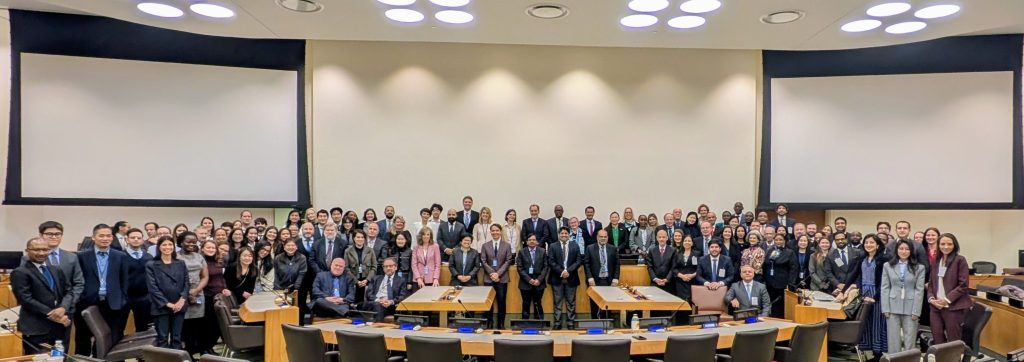
FICA Attending UNCITRAL Working Group II (Dispute Settlement) in New York – 12 to 16 February 2026
A FICA delegation composed of Co-Chair Dr. Herman Verbist and Mira Vats-Fournier, FICA Fellow, attended the 83rd session of UNCITRAL Working Group II (Dispute Settlement) in New York in the week of 12-16 February 2026.
During the session of UNCITRAL Working Group II, a “Colloquium on the Use of Artificial Intelligence in Dispute Resolution and Remote Hearings in Arbitration and Mediation” was organized and amendments to the UNCITRAL Model Law on International Commercial Arbitration were adopted in regard to the recognition and enforcement of arbitral awards in electronic form and amendments to the UNCITRAL Arbitration Rules in regard to electronic notices of arbitration.
Summary of Panel Discussion of 16 December 2025 on the “Position of the European Union towards the Singapore Convention on Mediation”
The European Dispute Resolution Society (“EDRS”) is an independent not-for-profit organization which aims to bring together academics, practitioners and policy-makers for debates on topical discussions and developments related to dispute resolution in, with and by the European Union and its Member States, in the broadest sense.
It organised a fourth event on 16 December 2025 on the topic of the “Position of the European Union towards the Singapore Convention on Mediation”. It was the first event which was organized fully online.
On behalf of the EDRS, Dr Herman Verbist (EDRS Executive Committee Member; attorney with Everest Attorneys) welcomed the more than 70 persons attending the event remotely.
Mr. Gordon Humphreys (Chairman of the First Board and the Third Board of Appeal at the EUIPO, Alicante) delivered a keynote speech on the topic of “When Global Treaties Knock : Dilemmas and Challenges in Embracing the Singapore Convention on Mediation within the EU”.
Dr. Herman Verbist was moderator of a panel discussion on the topic with the following speakers: Dr. Judith Knieper (Legal Officer, United Nations Commission on International Trade Law (UNCITRAL), Vienna; Secretary of Working Group II on Dispute Settlement and responsible for Mediation); Mr. Ales Zalar (Director at the Patent Mediation and Arbitration Centre (PMAC) of the Unified Patent Court, Ljubljana; Former Minister of Justice of Slovenia) and Dr. Norel Rosner (EU Commission, DG Justice and Consumers, Brussels).
The panel discussion was followed by a Q&A debate with the participation of the audience members attending remotely.
The event was hosted by the Everest Attorneys law office in Ghent.
Summary of EDRS Event:
The Position of the European Union towards the Singapore Convention on Mediation
Introduction and Context
The event, organized by the European Dispute Resolution Society (EDRS), focused on the position of the European Union (EU) regarding the Singapore Convention on Mediation (officially: United Nations Convention on International Settlement Agreements Resulting from Mediation).
It was noted that the Convention was adopted in December 2018 and entered into force in 2020. Although there are now 20 Parties to the Convention and although there are additional 42 Signatories, among which Australia, Brazil, China, India, Japan, Saudi Arabia, Türkiye, the United States of America and the United Kingdom, neither the EU nor any individual member state has signed the convention. This stands in contrast to the United Kingdom, which recently signed the Convention and announced its intention to maintain its position as a hub for international dispute resolution.
The aim of the EDRS event was to explore the relevance of the Convention for the EU, discuss the legal and political obstacles, and analyze the impact on European business and international trade.
Part 1: Current challenges and the necessity of the Convention
The waiting room metaphor
The discussion opened with a metaphor describing the Singapore Convention as a polite visitor that has been knocking on the EU’s door since 2018, only to be repeatedly asked to “wait in the lobby.” It was stated that while the EU expresses interest, it characterizes the situation as “complicated”.
The problem of cross-border enforcement
A central theme was the inefficiency of the current system. Without the Singapore Convention, enforcing a settlement reached through mediation with a party from a third country was described as a “creative obstacle course.” Parties often have to resort to:
- An arbitral award on agreed terms (which is not always possible if no arbitration has commenced);
- A court judgment (which can undermine the confidentiality of mediation);
- A notarial deed;
- Or even re-litigating the dispute as a breach of contract claim.
Reference was made to surveys indicating that a vast majority of international users consider enforceability essential. The Singapore Convention was positioned as the equivalent for mediation of what the New York Convention (1958) is for arbitration: a passport for global enforcement.
Economic relevance and Intellectual Property (IP)
The relevance for European business was strongly emphasized, particularly in the Intellectual Property (IP) field. Attention was drawn to the enormous volumes of disputes (e.g., tens of thousands of trademark and design cases annually at European agencies), a significant portion of which involves parties from outside the EU (such as China and the US). Mediation is being offered as an alternative means of resolving such disputes and relieving pressure on traditional proceedings. However, uptake needs significant nurturing and encouragement, particularly through reassurance that mediation settlement agreements will be enforceable against 40+% of EU IP rights holders domiciled in third countries.
It was argued that Small and Medium-sized Enterprises (SMEs) suffer the most from the lack of an efficient mechanism, given the costs and complexity of cross-border procedures. The Convention would offer certainty that is essential for fast-moving sectors such as technology and fashion.
Part 2: Content and operation of the Convention
A missing link
It was explained that the Singapore Convention is intended to fill a long-standing gap in international dispute resolution. Whereas arbitration has had an enforcement mechanism for decades, this was lacking for mediation. The Convention obliges state parties to enforce settlement agreements or allow them to be invoked as a defense (shield) in proceedings.
The principle of non-reciprocity
A crucial legal point highlighted was that the Convention does not require reciprocity. This means enforcement is possible based on the location of assets, not the nationality of the parties. Consequently, a warning was issued that European companies could already be subject to the Convention if they hold assets in a country that has ratified it, even if the EU itself is not a party.
Part 3: Perspective from new patent institutions
Lack of harmonization within the EU
It was noted that even within the EU, the enforcement of mediation agreements is not fully harmonized. The current EU Mediation Directive sets minimum standards, but national regimes vary considerably.
Workarounds and hybrid processes
Speakers associated with international patent institutions (such as the Unified Patent Court and associated centers) explained that they are currently forced to offer “workarounds,” such as hybrid processes (med-arb), where a settlement is converted into an arbitral award to make it enforceable under the New York Convention. This was described as a “bypass” for a problem the Singapore Convention would solve directly.
Competitive position
A warning was sounded that non-EU companies (from e.g., the US and China) will be less inclined to agree to mediation if there is no effective enforcement mechanism in the EU. This would disadvantage European companies, forcing them into more expensive and lengthy arbitration or litigation.
Part 4: The position of policy makers and the controversy
Legal and policy obstacles
An explanation was provided as to why the EU and its member states are hesitant. The scepticism stems from several factors:
- Nature of the agreement: In many member states, settlements are viewed as contracts, where the meeting of minds is central.
- Procedural differences: Many member states require the consent of both parties to make a settlement directly enforceable (e.g., via a notary). The Singapore Convention allows one party to request enforcement.
- Fear of ‘reverse discrimination’: If the EU accedes, it could lead to a dual system. Settlements from outside the EU would then be easier to enforce (unilaterally) than purely internal EU settlements (which often require double consent under the current EU directive).
Exclusive competence
It was clarified that individual EU member states cannot sign the Convention unilaterally. Because the Convention affects existing EU legislation (such as the Mediation Directive), it falls under the exclusive competence of the EU. A member state cannot, therefore, “go it alone.”
Difference from the Hague Conventions
In response to the question of why the EU acceded to the Hague Judgments Conventions but not to the Singapore Convention, it was said that the Hague Conventions are based on reciprocity and deal with court judgments, which aligns better with existing EU objectives to be part of a global system for the circulation of judgments.
Part 5: Discussion and conclusion
Risks of the status quo
The risks of not signing were discussed. It was argued that the EU, as a global economic player, lacks a reliable global enforcement tool. The current internal system of the EU does not solve the problem of external enforcement (with trading partners outside the EU).
Possible solutions
Suggestions for the way forward included:
- Conducting an impact assessment at the EU level.
- Mobilizing industry (especially SMEs) to make the importance of enforceability clear to policy makers.
- Reconsidering the fear of fragmentation and viewing the Convention as a complementary rather than a conflicting instrument.
- Increasing awareness that European companies may already face the Convention via their assets abroad.
Closing remarks
It was emphasized that the Singapore Convention is not an exotic legal accessory, but a necessary strategic tool for Europe’s competitiveness. The question “What are we waiting for?” was asked repeatedly, with the hope that the EU will eventually open the door to this Convention to reduce legal uncertainty and costs for businesses. The event concluded with the observation that while there are political and legal hurdles, commercial reality demands a solution for the global enforcement of mediated settlement agreements.
Summary of the 69th Session of UNCITRAL Working Group IV (Electronic Commerce)
Overview
19 November 2025
Report by Yuan Fang, Washington University in St. Louis
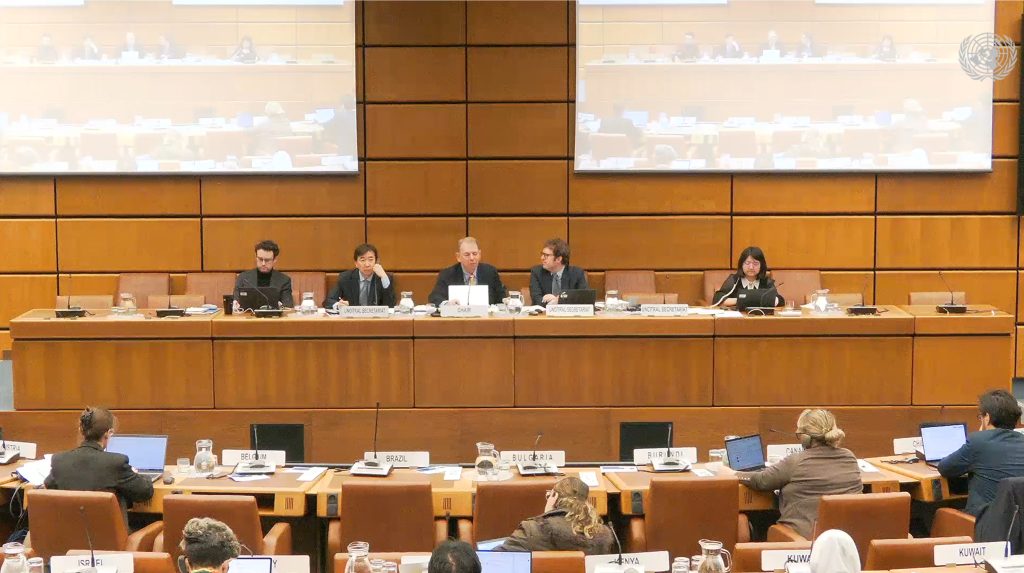
The sixty-ninth session of UNCITRAL Working Group IV (Electronic Commerce) was held in Vienna, Austria on October 20-24, 2025. The session, with broad participation from Member and observer States, international organizations, and NGOs, focused primarily on the ongoing effort to create harmonized provisions governing cross-border data provision. The Working Group considered the fourth revision of the draft default rules for data provision contract, primarily examining conceptual issues, article-by-article drafting questions (with intensive discussion devoted to Articles 1-9 of the draft rules), and next steps toward finalizing a normative text.
II. Preliminary Matters
The Working Group picked up discussions from its previous sessions on the legal distinction between active and passive data provision. Passive provision refers to situations where data is generated automatically through the use of a device or service without the data provider actively supplying it. Delegates widely supported including passive data provision within the scope of the rules, but applying lighter obligations to data providers given their limited control over data characteristics and transmission.
A draft definition of passive provision was introduced, outlining factors such as: (1) the data recipient accessing data through means it provides; (2) the object of the transaction being access to data generated through the provider’s activities; (3) no data quality or quantity undertaking by the provider; (4) lack of provider responsibility for technical systems collecting and transmitting data; and (5) lack of meaningful influence over contract terms. Delegates generally agreed that the definition should operate as a closed list, refined further in subsequent drafts.
Delegates also emphasized distinguishing “authorization” to access data (a contractual concept) from “consent” under privacy and data protection regimes, noting that the former does not make a person a contractual party merely by agreeing to data processing.
III. Article-by-Article Review
Article 1: Definitions
The definition of “data” may require refinement in various language versions to ensure it is understood as a record or representation, not the underlying information itself. On the definition of “use” of data, delegates questioned whether listing specific operations (e.g., storing, combining, modifying) was useful, and debated adding terms such as generating, saving, disclosing, or analyzing data. Concerns were raised that referencing “disclosing” could introduce personal-data complications. Some suggested deleting the definition altogether and addressing usage concepts solely in Article 9.
Article 2: Scope of Application
Debate centered on whether to exclude contracts involving software, since boundaries between data and software are increasingly blurred, especially with AI. Some States argued for excluding software supply contracts to avoid conflicts with well-established legal frameworks. Others countered that software-as-a-service and cloud services often involve substantial data provision components. A broader concept—excluding contracts involving functional data and representative data—garnered support. Delegates stressed, however, that any exclusions must clearly maintain the rules’ focus on transactions where the data itself is the contractual object.
There was extensive debate about consumer contracts. Some argued that excluding consumer transactions was outdated, especially given the prevalence of passive data flows from consumer devices. Others highlighted the difficulty of harmonizing consumer protection law across States. Delegates decided to defer a final decision until the overall structure of the rules becomes clearer.
Article 3: Party Autonomy
Delegates noted a risk that the current wording might allow parties to derogate from mandatory laws, including those preserved in Article 2(4). The text will likely be adjusted so that contractual freedom explicitly remains subject to mandatory law and applies only to substantive default rules.
Article 4: Interpretation
Delegates supported including guidance on general principles underlying the rules, such as good faith and equity. The explanatory note may also integrate considerations about the unique traits of data and data transactions.
Article 5: Obligation to Provide Data
The relationship between Article 5 (what is provided) and Article 6 (how) was clarified. Delegates debated how to fit passive provision into the framework. While some suggested modifying the operative rule to “allow collection” rather than “make available,” others argued that “making data available” is sufficiently broad if clarified in an explanatory note. Delegates agreed to reinsert language requiring providers to supply information necessary to access the data (e.g., passwords).
Article 6: Mode of Provision of Data
A key outcome was the development of a new paragraph addressing passive data provision. This paragraph states that, in passive scenarios, the data provider’s sole obligation is to allow, and not impede, access to the data or the data source using means supplied by the recipient. Delegates supported retaining references to “data sources,” given the centrality of connected devices. Concerns about data security, integrity, and system functionality were discussed, with the understanding that these issues may be addressed through interactions among Articles 6, 8, mandatory laws, and the duty to cooperate. Article 6 may undergo repositioning or redrafting.
Article 7: Timing of Provision of Data
The Working Group revisited whether “without undue delay” or “within a reasonable time” should be the default standard. While “reasonable time” aligns with the CISG, “without undue delay” was considered more fitting for instantaneous digital environments. Delegates determined that setting a fixed starting point (as in CISG Article 33) may not suit data transactions.
Article 8: Conformity of Data
Delegates agreed to retain paragraph 1, while proposals for paragraph 2 focused on whether conformity should reflect objective standards, recipient purposes, or representations. Paragraph 4, listing characteristics relevant to assessing conformity, was refined by adding “availability” and references to “origin” and “coherence.” Concerns were raised that excessively long lists may be counterproductive. Delegates broadly agreed that conformity rules should not apply to passive provision of data.
Article 9: Use of Data
The chapeau and paragraph (a) were retained, stressing that contractual agreements cannot authorize unlawful use. A new proposed default rule would require the recipient to ensure its data usage does not infringe third-party or provider rights. Challenges remain regarding data deletion obligations, particularly when derived or trained-model data is involved.
IV. Next Steps
There was broad consensus to avoid a convention at this stage. Delegations were split between developing a model law or a legislative guide, ultimately agreeing that the next draft would consist of model legislative provisions with explanatory notes, with a final decision to follow. Completion in 2026 depends on progress at the next session and Commission scheduling.
FICA Attending UNCITRAL Working Group II in Vienna – 13 to 17 October 2025

FICA Attending UNCITRAL Working Group II in Vienna – 13 to 17 October 2025
A FICA delegation composed of Co-Chair Dr. Herman Verbist and Secretary and Board member Dr. Alan Anderson attended the 82th session of UNCITRAL Working Group II in Vienna in the week of 13-17 October 2025.
The session of UNCITRAL Working Group II discussed a Note prepared by the UNCITRAL Secretariat on the subject of Recognition and Enforcement of arbitral awards in electronic format.
Uncitral Working Group I
2014 to present: Micro, Small and Medium-sized Enterprises
See the UNCITRAL website link below for links to UNCITRAL Working Group I relevant papers:
https://uncitral.un.org/en/working_groups/1/msmes
UNCITRAL Working Group II
2000 to present: Arbitration and Conciliation / Dispute Settlement
See the UNCITRAL website (link below) for the upcoming UNCITRAL Working Group II agenda, and links to relevant papers.
https://uncitral.un.org/en/working_groups/2/arbitration
UNCITRAL Working Group III
2017 to present: Investor-State Dispute Settlement Reform
See the UNCITRAL website (link below) for the upcoming UNCITRAL Working Group III agenda, and links to relevant papers.
https://uncitral.un.org/en/working_groups/3/investor-state
Uncitral Working Group IV
1997 to present: Electronic Commerce
See the UNCITRAL website link below for links to UNCITRAL Working Group IV relevant papers.
https://uncitral.un.org/en/working_groups/4/electronic_commerce
Uncitral Working Group V
2001 to present: Insolvency Law
See the UNCITRAL website link below for links to UNCITRAL Working Group V relevant papers.
https://uncitral.un.org/en/working_groups/5/insolvency_law
Uncitral Working Group VI
2002 to present: Security Interests
See the UNCITRAL website link below for links to UNCITRAL Working Group VI relevant papers.
https://uncitral.un.org/en/working_groups/6/sale_ships
UNITED NATIONS COMMISSION ON INTERNATIONAL TRADE LAW Working Group II (Dispute Settlement) Seventy-third session, 22-26 March 2021
- Decision on the dates and place as well as the arrangements for the sessions of UNCITRAL working groups in the first half of 2021 during the coronavirus disease 2019 (COVID-19) pandemic.
- Annotated provisional agenda
- The draft expedited arbitration provisions, based largely on the report of the last session
- Report of the last session
UNITED NATIONS COMMISSION ON INTERNATIONAL TRADE LAW Working Group III (ISDS Reform) Thirty-ninth Session Vienna, 5–9 October 2020
- List of Participants
- Draft summary (English)
- Projet de synthèse (Français)
- Proyecto de resumen (Español)
- 纪要草稿 (中文)
- مشروع ملخ ص
- Проект резюме
UNITED NATIONS COMMISSION ON INTERNATIONAL TRADE LAW Working Group II (Dispute Settlement) Seventy-second session Vienna (online) 21–25 September 2020